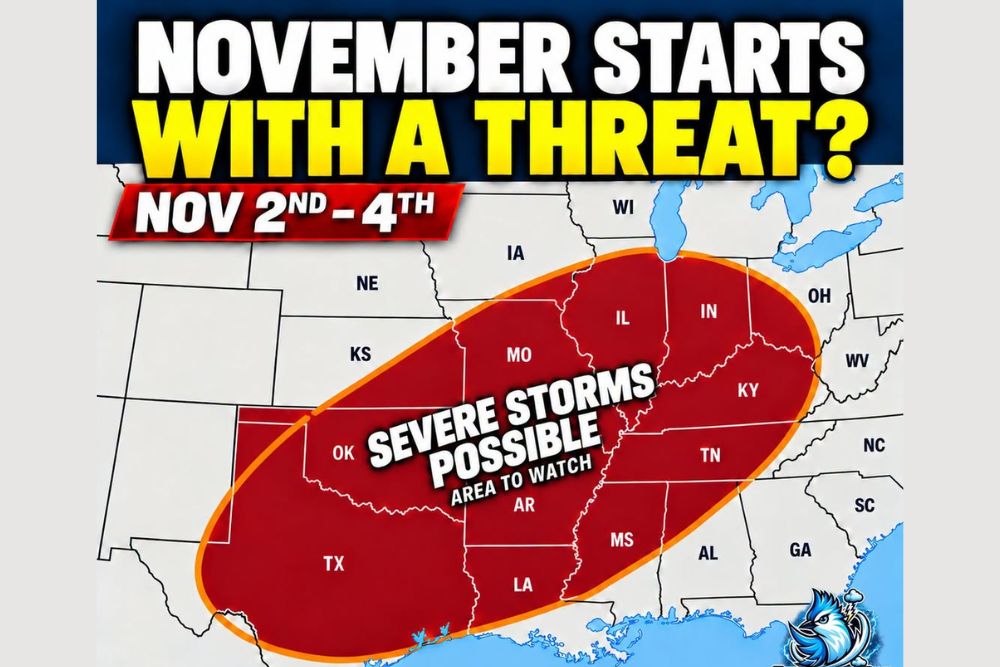
Severe Storms Possible November 2 to 4 Across Texas, Oklahoma, Arkansas, Missouri, Tennessee and Kentucky as a Strong System Exits the Rockies
LITTLE ROCK, AR — November may start with a threat of severe weather across a large portion of the central and southern United States. A vigorous disturbance moving out of the Rocky Mountains and into the Plains could set the stage for strong to severe thunderstorms from Monday, November 2, through Wednesday, November 4. Parts of the Southern Plains, Mississippi Valley, and Ohio and Tennessee Valleys are included in a broad area to watch, though exact timing, coverage, and specific threats are still coming into focus.
Broad Area to Watch for Severe Storms
The early outlook highlights a wide zone stretching from Texas and Oklahoma northeastward through Arkansas, Louisiana, Missouri, Mississippi, Tennessee, Kentucky, Illinois, and Indiana. Southwestern portions of Ohio also sit near the edge of the area.
Forecasters stress that this shaded region is an early heads-up, and not everyone inside it will experience severe weather. As the system gets closer, the area of greatest concern is expected to narrow.
What Could Fuel the Storms
Ahead of the approaching system, warm, moist air is expected to return northward from the Gulf of Mexico. This moisture, combined with rising temperatures, could provide the energy needed for thunderstorms to develop.
At the same time, strengthening winds aloft associated with the disturbance could support organized severe storms, if enough instability develops. Organized storms can produce damaging winds, large hail, and in some cases tornadoes.
Part of a Larger Pattern Change
This system is tied to a powerful Pacific storm expected to move onshore over the weekend, bringing mountain snow to the Rockies before emerging into the Plains. Forecast guidance has also shown a deep low pressure system developing over the Central Plains by early next week, along with a significant drop in barometric pressure.
The system is also expected to bring a strong cold front through Texas early in the week, followed by much cooler and drier air.
Fall Severe Weather Season Begins
While spring is the most well-known severe weather season, many southern states see a secondary peak in the fall. November often brings strong cold fronts that clash with lingering warm, humid air, creating conditions favorable for severe storms.
Late fall storms can be especially dangerous because they often move quickly and may occur at night when people are asleep.
How to Prepare Now
Residents across the outlined area should keep up with forecast updates over the next several days. Make sure weather alerts are enabled on phones, review severe weather safety plans, and identify a safe shelter location at home, work, or school.
More Details to Come
The exact timing and specific threats will become clearer as the system approaches. Severe weather does not end when October does, and residents should stay weather aware heading into next week.
For continuing coverage of severe weather outlooks, November storms, and critical weather analysis across the United States, visit Weather Radar.