King Tides and Onshore Winds Bring Moderate to Major Coastal Flooding to Florida as Jacksonville Beach Faces 3 Feet of Water Through Wednesday
JACKSONVILLE BEACH, FL — Moderate to major coastal flooding is expected along Florida’s Atlantic coast over the next several days as exceptionally high king tides combine with persistent, breezy onshore winds. The setup will push saltwater into vulnerable neighborhoods, cause beach erosion, and flood roads, leading to possible closures from Jacksonville Beach to Key West. The flooding threat runs from Sunday through Wednesday at high tide, with the most significant impacts expected on Monday and Tuesday.
Highest Water Levels Along Northeast Florida
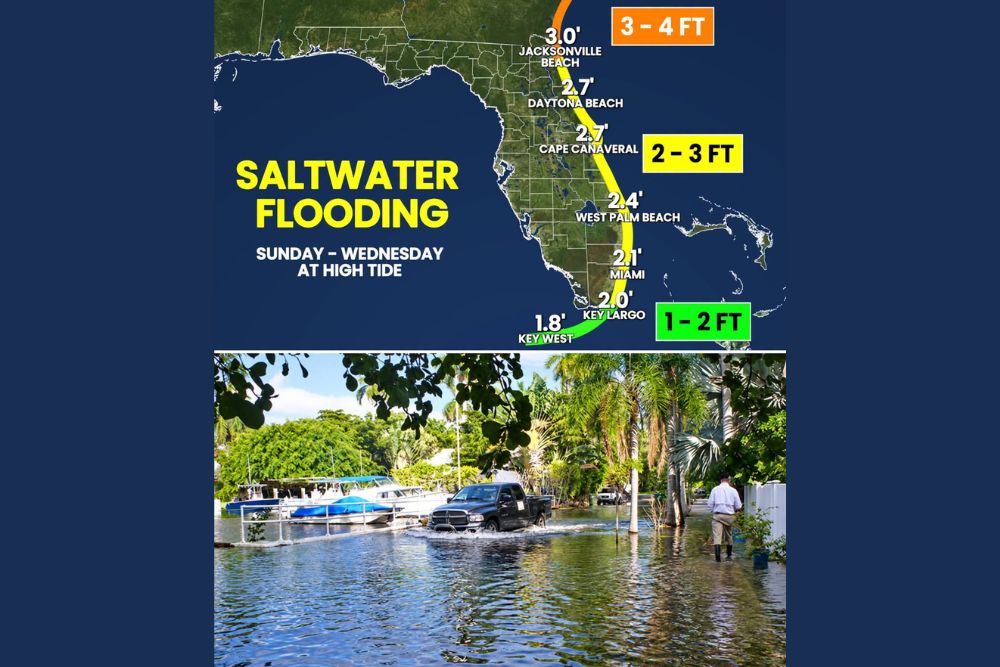
The greatest saltwater flooding is forecast along Northeast Florida, where water levels could reach about 3.0 feet above normally dry ground at high tide near Jacksonville Beach. This area falls within the 3 to 4 foot category, the most severe level in the forecast.
Flooding of this depth can inundate streets, parking lots, yards, and low-lying properties, making travel extremely difficult near the coast and along the St. Johns River and Intracoastal Waterway.
Central Florida Coast Faces 2 to 3 Feet
Along the Central Florida coastline, saltwater flooding of 2 to 3 feet is expected. Daytona Beach and Cape Canaveral could both see water levels near 2.7 feet above normally dry ground at high tide.
Farther south, West Palm Beach is forecast to see flooding near 2.4 feet, while Miami could reach around 2.1 feet. Neighborhoods along canals, bays, and the Intracoastal Waterway will be especially vulnerable.
Florida Keys Also Affected
In the Florida Keys, Key Largo is expected to see saltwater flooding near 2.0 feet, while Key West could reach around 1.8 feet, placing it in the 1 to 2 foot category. Even at these levels, low-lying streets and properties across the Keys may experience significant flooding during high tide cycles.
What Causes King Tides
King tides are exceptionally high tides that occur when the moon is closest to Earth and aligned with the sun, increasing gravitational pull on the oceans. When these tides coincide with strong onshore winds, water is pushed even higher along the coast, creating flooding in areas that are normally dry.
Rising sea levels have also made king tide flooding more frequent and severe in many coastal communities across Florida.
Saltwater Can Damage Vehicles
Drivers are strongly urged not to drive through flooded roads. Saltwater can cause serious and long-lasting damage to vehicles, including corrosion of brakes, electrical systems, and undercarriages. Even shallow water can hide potholes, debris, and washed-out pavement.
Residents in flood-prone neighborhoods should move vehicles to higher ground before high tide and avoid walking through floodwater, which may contain debris or contaminants.
Beach Erosion Concerns
The combination of high tides and persistent onshore winds will also cause beach erosion along exposed shorelines. Beachgoers should be cautious of rough surf and dangerous rip currents.
Monitoring Through Midweek
Coastal residents should monitor tide schedules and local alerts through Wednesday, as flooding will peak during each high tide cycle.
For continuing coverage of Florida coastal flooding, king tides, and critical weather analysis across the United States, visit Weather Radar.