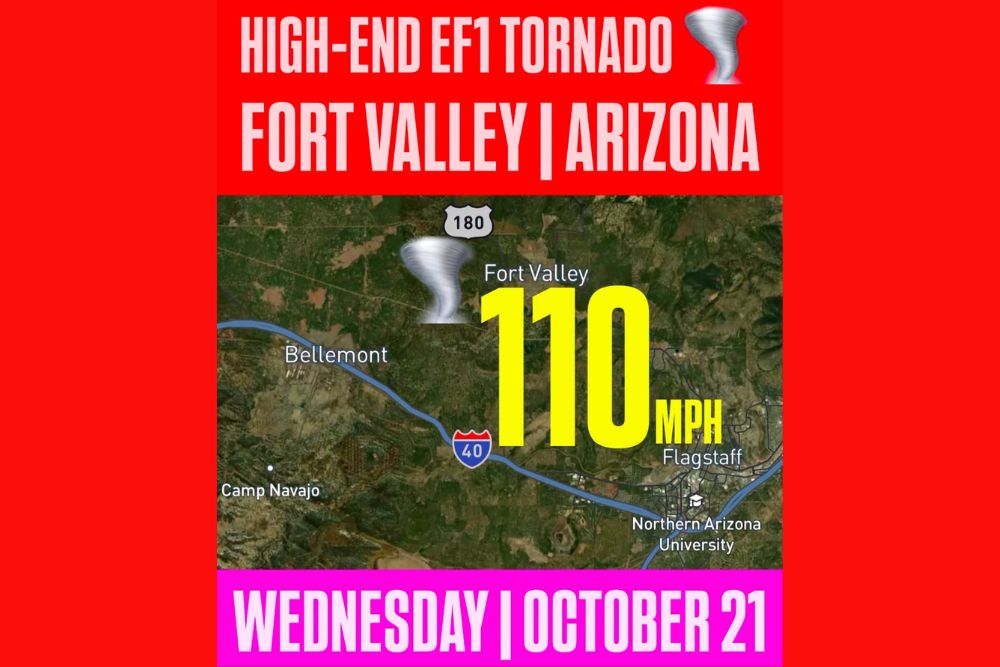
Flagstaff Weather Service Confirms High-End EF1 Tornado Near Fort Valley, Arizona With 110 MPH Winds Just Shy of EF2 Strength
FLAGSTAFF, AZ — The National Weather Service in Flagstaff has confirmed another tornado from the historic severe weather outbreak on Wednesday, October 21, this time near Fort Valley, just northwest of Flagstaff. The tornado was rated a high-end EF1 with peak winds estimated at 110 mph, placing it just 1 mph shy of the EF2 threshold. The confirmation adds to a growing list of tornadoes from one of the most unusual severe weather days in Arizona history.
A High-End EF1 Near Flagstaff
On the Enhanced Fujita Scale, an EF1 tornado produces winds between 86 and 110 mph, while an EF2 begins at 111 mph. With winds estimated at 110 mph, the Fort Valley tornado sat at the very top of the EF1 range.
Tornadoes of this strength can snap or uproot large trees, peel roofs from homes, overturn mobile homes, and destroy outbuildings. In heavily forested areas like those surrounding Flagstaff, tree damage is often one of the clearest signs of a tornado’s path and strength.
Tornado Location Near U.S. Highway 180
The tornado occurred near Fort Valley, located along U.S. Highway 180 northwest of Flagstaff. The area sits in the Coconino National Forest near the base of the San Francisco Peaks, a region known more for winter snowstorms than tornadoes.
Nearby landmarks include Bellemont, Camp Navajo, and the Interstate 40 corridor to the south, along with Northern Arizona University in Flagstaff to the southeast.
Second Strong Tornado Confirmed From the Outbreak
This is the second notable tornado confirmed from the October 21 event. Earlier, the National Weather Service rated a tornado near Prescott Valley as an EF1 with peak winds of 105 mph and a path length of just over 8 miles.
The outbreak came during a rare Level 3 out of 5 severe weather risk for Arizona, the first time such a risk level had been issued for the state. Forecasters had highlighted north central Arizona, including Flagstaff, Sedona, and Prescott, as the area with the highest potential for tornadoes, large hail, and damaging winds.
Why This Event Stands Out
Tornadoes are uncommon in Arizona, and strong tornadoes at high elevations are even more unusual. Fort Valley sits at roughly 7,000 feet above sea level, making this tornado a striking example of how the right combination of moisture, instability, and wind shear can produce rotating storms even in mountainous terrain.
How Tornado Ratings Are Determined
The National Weather Service assigns ratings after damage surveys. Teams examine damage to trees, homes, and other structures to estimate the strongest winds along the tornado’s path.
Staying Prepared
The October 21 outbreak serves as a reminder that tornadoes can occur in places where residents may not expect them. Keeping weather alerts enabled and knowing where to shelter remains important for everyone.
For continuing coverage of tornado reports, severe storms, and critical weather analysis across the United States, visit Weather Radar.