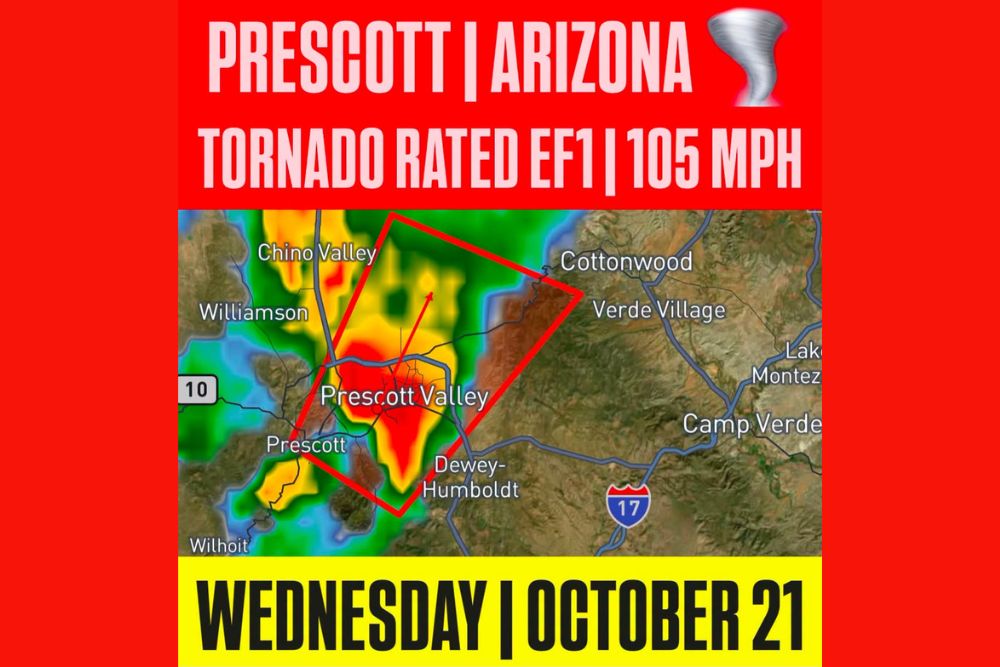
Tornado Near Prescott Valley, Arizona Rated EF1 With 105 MPH Winds After Tracking More Than 8 Miles During Rare October 21 Severe Outbreak
PRESCOTT VALLEY, AZ — The tornado that touched down near Prescott on the morning of Wednesday, October 21, has officially been rated an EF1 on the Enhanced Fujita Scale, with peak winds estimated at 105 mph. That estimate falls just 6 mph short of the EF2 threshold, making it a notably strong tornado for Arizona. The tornado remained on the ground for just over 8 miles, tracking through the Prescott Valley area during one of the most unusual severe weather events the state has ever seen.
A Strong Tornado for Arizona Standards
An EF1 tornado produces winds between 86 and 110 mph, strong enough to peel roofing, snap trees, overturn mobile homes, and damage outbuildings. With winds estimated at 105 mph, this tornado sat near the top of the EF1 range.
Tornadoes are relatively rare in Arizona, and most that do occur are brief and weak. A tornado with this strength and an 8-mile path length stands out as a significant event in the state’s weather history.
Tornado Tracked Through Prescott Valley
Radar imagery from the event showed an intense storm centered over Prescott Valley, with the storm’s strongest returns positioned between Prescott and Dewey-Humboldt. The tornado warning polygon stretched from southwest of Prescott Valley northeastward toward Cottonwood.
The tornado’s path moved generally north-northeast from the Prescott Valley area, according to radar tracking shown with the storm. Nearby communities including Chino Valley, Williamson, Verde Village, and Camp Verde were located near the broader storm region.
Part of a Historic Severe Weather Event
The tornado formed during a rare Level 3 out of 5 severe weather risk for Arizona, an unusual designation for the state. Forecasters had highlighted north central Arizona, including Prescott, Flagstaff, and Sedona, as the area with the highest severe weather potential.
The setup brought a combination of moisture, instability, and wind shear that allowed rotating supercell thunderstorms to develop, producing tornadoes, large hail, and damaging winds across portions of the region.
How Tornado Ratings Are Determined
The National Weather Service assigns tornado ratings after conducting damage surveys. Survey teams examine damage to buildings, trees, and other structures to estimate wind speeds based on established engineering standards.
The Enhanced Fujita Scale ranges from EF0, the weakest, to EF5, the most violent. Ratings are based on the most severe damage observed along a tornado’s path.
Recovery Continues in the Area
Residents affected by the tornado continue working on cleanup and repairs. Anyone with storm damage is encouraged to document losses with photos and contact their insurance providers.
Staying Prepared for Future Storms
This event serves as a reminder that tornadoes can occur in places where they are uncommon. Residents should keep weather alerts enabled and have a plan for where to shelter if a warning is issued.
For continuing coverage of tornado reports, severe storms, and critical weather analysis across the United States, visit Weather Radar.