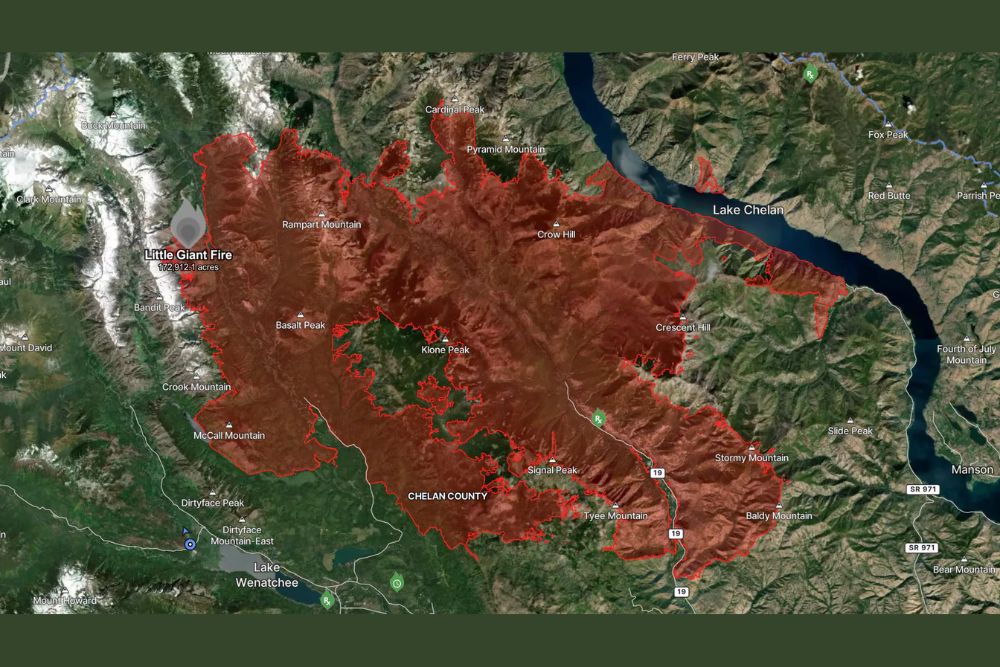
Little Giant Fire, Washington State’s Largest Wildfire of the Year, Reaches Full Containment at 172,912 Acres in Chelan County Near Lake Chelan
CHELAN, WA — The Little Giant Fire, the largest wildfire in Washington state this year, has been declared fully contained after burning 172,912.1 acres in Chelan County. The milestone was announced on the afternoon of Wednesday, October 28, marking a major turning point after months of firefighting efforts in the rugged mountains of north central Washington. While containment is a strong sign of progress, officials note it does not mean the fire is completely extinguished, and some areas may continue to smolder until winter weather arrives.
A Massive Burn Area West of Lake Chelan
The fire perimeter stretches across a vast area of mountainous terrain west of Lake Chelan. The burned area extends from near Cardinal Peak and Pyramid Mountain in the north to Tyee Mountain and Signal Peak in the south, and from Basalt Peak and McCall Mountain in the west to Crescent Hill and Stormy Mountain in the east.
The fire also reached close to the shoreline of Lake Chelan, burning along steep slopes above the water. Other landmarks within the fire area include Rampart Mountain, Crow Hill, Klone Peak, and Baldy Mountain.
What Full Containment Means
Containment means firefighters have established control lines around the entire perimeter of the fire, preventing it from spreading further under expected conditions. However, interior areas may still contain hot spots, burning logs, and smoldering stumps.
In large mountain fires, pockets of heat can remain for weeks or even months. Fire officials typically rely on fall rain and winter snow to fully extinguish remaining heat within the burn area.
Months of Firefighting Effort
The Little Giant Fire required extensive resources, with crews battling steep terrain, dense forests, and challenging weather conditions throughout the fire season. Firefighters worked to protect communities, infrastructure, and recreation areas around Lake Chelan, Entiat, and nearby valleys.
The successful containment reflects the work of ground crews, aviation resources, and support teams who spent months managing the fire.
Recovery and Safety Concerns
With such a large burn area, officials will now focus on recovery and long-term safety. Burned slopes can increase the risk of flash flooding, mudslides, and debris flows during heavy rain, particularly in steep drainages that feed into Lake Chelan and surrounding rivers.
Residents and visitors should continue to follow closure orders and stay away from burned areas, where weakened trees and unstable ground can pose serious hazards.
Cooler Weather Helping
Cooler fall temperatures, higher humidity, and recent precipitation across the Pacific Northwest have helped reduce fire activity. Recent overnight lows dropping into the 20s and 30s across eastern Washington have also helped slow fire behavior across the region.
Gratitude for Firefighters
Communities across Chelan County are expressing gratitude to firefighters and emergency personnel for their work throughout the long fire season.
For continuing coverage of wildfire updates, Pacific Northwest weather, and critical weather analysis across the United States, visit Weather Radar.