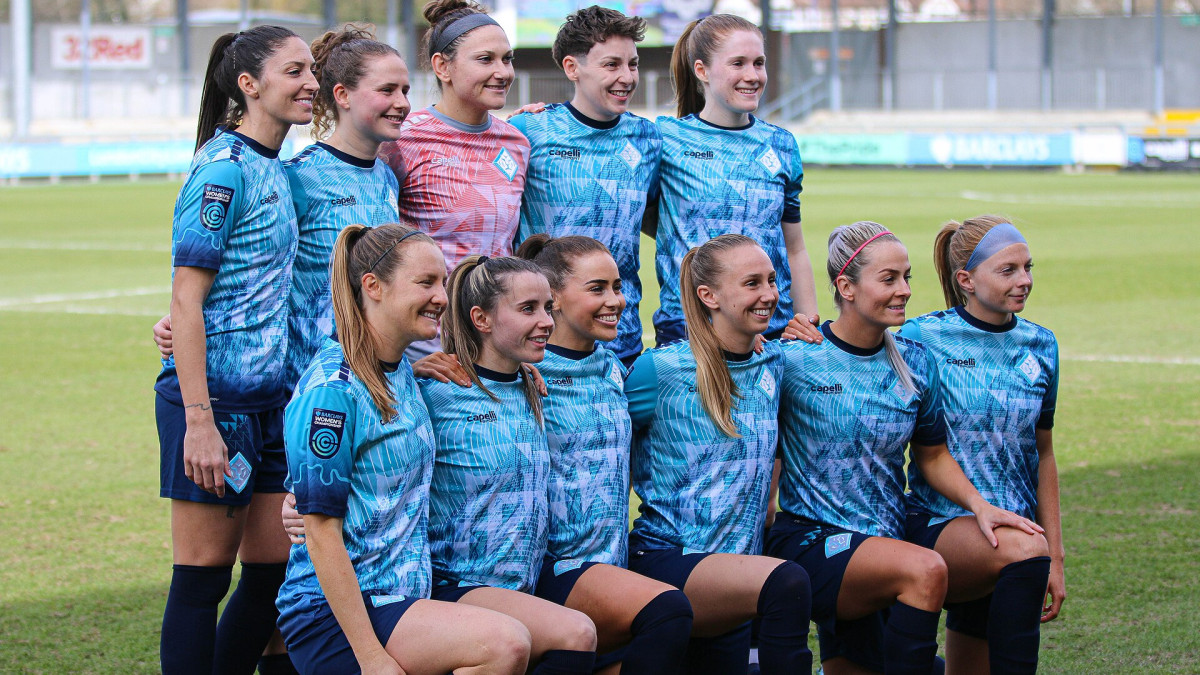
London City Lionesses’ new front-of-shirt sponsorship with Nike is being presented as a commercial landmark, but the most important figures remain private. Club owner Michele Kang says it is the largest women-only front-of-shirt deal and exceeds some agreements in the men’s Premier League. Neither the value nor the duration has been disclosed.
That distinction matters. Kang’s comparisons give the agreement its immediate significance, particularly for a club approaching only its second top-flight season, but they do not provide an independently verifiable valuation. The deal can reasonably be viewed as an important commercial development without treating its claimed scale as established financial fact.
Michele Kang’s benchmarks for the Nike sponsorship
As reported by The Guardian, Kang has described the Nike agreement as the largest women-only front-of-shirt deal. She has also said it is worth more than the reported agreement involving Atlanta, which has been put at approximately $4m per year.
Kang has gone further by saying the London City deal exceeds some men’s Premier League front-of-shirt agreements. That is a striking comparison, but it remains an attributed claim rather than a quantifiable conclusion. Without London City disclosing a value or contract length, it is not possible to establish the annual worth of the sponsorship or test the comparisons on a like-for-like basis.
The careful reading, therefore, is that London City’s owner has supplied two ambitious benchmarks: the reported Atlanta figure and an unspecified group of men’s Premier League deals. Both help explain why the agreement is being called a landmark. Neither reveals what Nike is actually paying.
Why new revenue matters to London City Lionesses
London City’s latest disclosed financial context makes the interest in the sponsorship easy to understand. The club posted annual revenue of just £902,000 for the 2024-25 season. Its operating loss was more than £10m and exceeded that revenue by more than ten times.
The unpublished Nike figure should not be set directly against that loss, and there is no basis for suggesting that one sponsorship agreement resolves the difference. The accounts nevertheless show why a substantial commercial deal would carry unusual importance for the club: its recent revenue base was small relative to its operating loss.
Revenue also forms part of the Women’s Super League’s wage-control calculation. Under the stated formula, clubs cannot spend more on player wages than 80% of their relevant revenue plus up to £4m in owner contributions. This makes the relevant-revenue component strategically important, but the formula alone does not reveal the spending capacity created by the Nike deal.
No sponsorship value has been supplied from which to make that calculation. The available information also does not establish a salary-cap allowance or permit a conclusion about regulatory compliance.
A landmark claim alongside major recruitment
The agreement arrives as London City prepare for only their second season in the top flight. Their recruitment has included former Ballon d’Or winner Alexia Putellas, former England goalkeeper Mary Earps and Mapi León, Putellas’ teammate with Spain and Barcelona.
Putellas brings a particularly prominent sporting record: she helped Spain win the 2023 World Cup and has won the Champions League four times with Barcelona. Those arrivals provide context for London City’s growing profile, although they do not supply evidence about Nike’s valuation or the financial mechanics of the sponsorship.
At an analytical level, Nike’s willingness to enter the agreement may signal confidence in the commercial potential surrounding the club and women’s football. The undisclosed terms, however, prevent that signal from being converted into a firm valuation. Even the claim that it exceeds certain men’s Premier League deals cannot be measured from the information available.
What remains unknown about the agreement
The distinction between a total contract value and an annual value is essential when evaluating a commercial comparison. Here, neither can be established because the deal’s value and length have not been disclosed. The Atlanta reference is a reported approximate annual figure, while no corresponding annual figure has been given for London City. That prevents a like-for-like test of Kang’s benchmark and leaves the payment itself unknown.
The sponsorship is therefore significant for what Kang says it represents and for the financial position in which London City have secured it. Its precise place in the market will remain an attributed claim until the club or Nike discloses the duration, total or annual value, and the basis on which the cited comparisons were made.
Discussion
Be the first to comment
No comments yet
Be the first to share your thoughts on this article. Start the conversation!