Superstars shine on the biggest stage
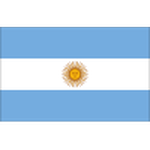
The 2026 FIFA World Cup has delivered a festival of football that has put the game’s biggest names front and center. At the heart of the narrative is Lionel Messi, who at 39 has defied expectations to lead the scoring charts and reignite the debate over his status as the greatest of all time. His performances have been game-changing, with goals that only a player of his calibre could conjure.
But Messi is far from the only headline act. Kylian Mbappé, Erling Haaland, Harry Kane, and Cristiano Ronaldo have all made their mark, with Ronaldo notably silencing critics in a five-goal rout of Uzbekistan. Jude Bellingham has been a transformative force for England, while breakout moments have also emerged. Switzerland’s 20-year-old Johan Manzambi and Cape Verde’s 40-year-old goalkeeper Vozinha have captured imaginations, proving that star power and Cinderella stories can coexist.
The depth of elite talent has left little room for unknown quantities to truly explode, but the stage was set for the sport’s biggest icons to deliver drama on the highest peak.
The 48-team format: a risk that paid off?
The expanded 48-team format came with widespread fears of mismatch scorelines and a diluted product. Early on, those fears materialized: Cameroon, Curaçao, New Zealand, Saudi Arabia, and Iraq suffered heavy defeats. Portugal’s five-goal thrashing of Uzbekistan—capped by Ronaldo’s exploits—was a stark example of the gap between established powers and newer faces.
Yet the tournament has also produced upsets that justify the expansion. Cape Verde, one of the smallest nations ever to qualify, held European champions Spain to a 0-0 draw and gave world champions Argentina a massive fright in the last 32. Elsewhere, DR Congo took a point off Portugal to reach the knockouts for the first time, while co-hosts Canada earned their first World Cup win en route to the last 16.
“The new and rarely-seen faces at this World Cup added extra colour and intrigue,” noted Sky Sports Football.
The format remains contentious—the group stage felt interminable, and the third-place qualifier equations frustrated purists—but for many fanbases, this World Cup has provided memories to last a lifetime.
Late drama and the hydration break debate
One of the iconic images of this tournament has been the relentless sequence of stoppage-time winners. Hydration breaks and VAR reviews have extended matches significantly, and that additional time has yielded moments of pure theatre. Argentina’s epic turnaround against Egypt exemplified the trend, with over 10 stoppage-time goals recorded across the competition.
However, the hydration breaks themselves have drawn scorn from fans, with boos ringing out midway through each half. The fragmentation of games into four distinct quarters has altered the rhythm of football, prompting debate over whether player welfare measures are eroding the sport’s fluidity. FIFA will undoubtedly face calls to recalibrate their approach after the tournament.
For neutrals, the lesson has been clear: do not leave your seat until the final whistle. The drama has been unrelenting.
Politics, pressure, and the road ahead
Off the pitch, geopolitics has simmered. The possibility of Russia’s reintegration into international football has met resistance from UEFA, setting up a potential clash with FIFA. Meanwhile, allegations of favouritism have surfaced—Egypt called for officials to be dismissed after their contentious loss to Argentina, claiming bias toward Messi and his team.
These subplots add layers to a tournament already rich in narrative. The expanded field, the hydration breaks, and the concentration of power among the elite have all shaped a World Cup that will be analyzed for decades. As the knockout rounds continue, the stakes only grow higher.
Key Takeaways
- Icons deliver: Messi’s golden boot charge and the collective brilliance of Mbappé, Haaland, Kane, and Ronaldo have defined the on-field story.
- Expansion ups and downs: Heavy defeats for smaller nations were balanced by historic upsets, none more compelling than Cape Verde’s resilient run.
- The new rhythm of football: Hydration breaks and extended stoppages have increased drama but frustrated traditionalists.
- Geopolitics loom: Tensions over Russia’s potential return and accusations of officiating bias have injected controversy.
- Still unmissable: For all its quirks, the 2026 World Cup has cemented itself as a tournament of unforgettable moments and global conversation.
Quick Facts
Top scorer so far: Lionel Messi (Argentina)
Biggest shock: Cape Verde 0-0 Spain (group stage)
Most stoppage-time winners: 10 (and counting)
New ground broken: Switzerland’s first quarter-final since 1954; DR Congo’s first knockout appearance; Canada’s first wins and points