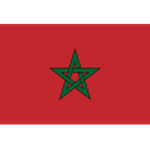
Morocco's journey from World Cup underdogs to genuine contenders has been nothing short of remarkable. As the Atlas Lions prepare to face France once again in a high-stakes quarter-final at World Cup 2026, the question on everyone's lips is: can this North African nation cement its place among football's elite?
The Investment Blueprint
Behind Morocco's surge lies a meticulously planned strategy, driven by the very top. King Mohammed VI has personally championed a wave of investment in football infrastructure, pouring significant funds into a state-of-the-art training facility, a national academy, regional training centres, and stadium redevelopments. Thousands of amateur pitches have also been laid, creating a pyramid that feeds talent from the grassroots to the elite.
Neil Ward, former director of technical operations at the Royal Moroccan Football Federation (RMFF), saw the transformation up close.
"You need those top facilities for players in Europe who are used to it. So when you come in and see a training facility of this calibre, it shows you these people are serious and want to be successful."
Yet the investment has drawn criticism from youth protesters, who argue that such funds should be channelled into education, healthcare, and housing. The royal palace responded by boosting the budget for health and education by 16% year-on-year, but the debate underscores the delicate balance between sporting ambition and social need.
The Diaspora Strategy
Morocco's success has been built on embracing its global diaspora. Over five million Moroccans live abroad, and the federation has deployed full-time scouts in France, the Netherlands, Spain, Germany, Norway, Sweden, and Denmark to identify and nurture promising dual nationals from an early age.
Simon Jennings, a coaching educator involved in youth development in Morocco from 2020 to 2024, noted the authenticity of the players' connection.
"They are totally into being Moroccan. It's a passion they have and a nationality they feel strongly about."
The numbers are striking: 19 of the 26 members of Morocco's current World Cup squad were born outside the country. One of the latest recruits, Ayyoub Bouaddi, was eligible for France—Morocco's quarter-final opponents—but chose to represent the Atlas Lions after a determined pursuit by the RMFF. Even players like Michael Olise, who opted for France, highlight the intense competition for talent.
The 2022 Legacy and Beyond
When Morocco became the first African nation to reach a World Cup semi-final in 2022, it was not just a sporting miracle—it was a statement of intent. Head coach Walid Regragui had told his players before the tournament that they were not there to make up the numbers, and the run to the last four ignited celebrations across the nation. Ward remembers how
"it took over all the city right through until the early hours of the morning, with the king out celebrating as well."
Now, co-hosting the 2030 World Cup alongside Spain and Portugal, Morocco is poised to use the global stage as a springboard. A quarter-final victory over France on Thursday (21:00 BST at Boston Stadium) would mark another historic step, proving that 2022 was no fluke. With the infrastructure, diaspora strategy, and a rapidly improving domestic league, the Atlas Lions are not just dreaming of powerhouse status—they are building it.
Key Takeaways
- Morocco's football rise is underpinned by significant royal investment in facilities and grassroots development.
- The federation's proactive diaspora scouting has yielded a squad where 19 of 26 players were born abroad.
- Critics argue the spending should be redirected to social services, but the government has increased health and education budgets.
- The 2022 semi-final run and co-hosting the 2030 World Cup signal a long-term ambition to become a global football powerhouse.
- A win against France in the 2026 quarter-final would further validate Morocco's growing stature.
Quick Facts
FIFA Ranking: 6th (as of 2026)
2022 World Cup: First African semi-finalists
Squad composition: 19 of 26 players born outside Morocco
2030 World Cup: Co-hosts with Spain and Portugal
Key upcoming match: vs. France, World Cup 2026 quarter-final, July 9, 21:00 BST, Boston Stadium