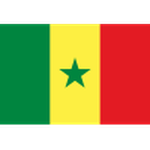
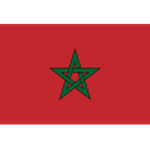
A storm is gathering over African football after the Confederation of African Football’s (CAF) appeals committee ruled on Tuesday to remove Senegal as champions of the 2025 Africa Cup of Nations and award the title to Morocco.
The decision has triggered disbelief across the continent, not simply because of its scale, but because of what it implies about the balance of power inside the game. Long-time observers have described the ruling as unprecedented in tone and consequence, with critics arguing it cuts against established principles that protect on-field decisions from being rewritten in committee rooms.
According to the source report, a former member of CAF’s appeals structures said the body “does not have the power to change the on-field decision of a referee,” calling the outcome “disgraceful” and difficult to reconcile with CAF’s own disciplinary and judicial framework. Those remarks encapsulate the central complaint now echoing around African football circles: that an internal legal mechanism has been used to overturn what many believe should have remained settled by the match officials on the day.
⚽ Key Insight
The backlash also lands at a sensitive moment for CAF president Patrice Motsepe, whose tenure has repeatedly been framed around restoring credibility and professionalising the confederation’s administration. This ruling, as described in the source, risks becoming another flashpoint for those who feel governance remains inconsistent and overly politicised, with major decisions appearing to arrive without sufficient clarity for supporters, teams and federations.
While CAF has yet to provide a full public explanation that satisfies the wave of criticism, the reaction shows how fragile trust can be when results appear subject to legal revision after the final whistle. In a sport where legitimacy is inseparable from process, the question many are now asking is simple: what, exactly, is the limit of the appeals committee’s authority—and who defines it?
For Senegal, the decision threatens to overshadow what would otherwise be remembered as a defining continental triumph. For Morocco, the manner of receiving the trophy may also be complicated by the optics of a title awarded away from the pitch. And for CAF, the broader risk is reputational: that future tournaments will be played under a cloud of uncertainty about whether outcomes are truly final.
Infographic: What we know so far
Decision: CAF appeals committee awards AFCON 2025 title to Morocco, stripping Senegal
Immediate reaction: Widespread anger and disbelief across Africa
Core dispute: Whether an appeals body can overturn referee/on-field outcomes
Leadership spotlight: Added scrutiny on CAF president Patrice Motsepe’s governance
Key Takeaways
- CAF’s appeals committee ruling has removed Senegal’s AFCON 2025 title and handed it to Morocco.
- Critics argue appeals bodies traditionally cannot rewrite on-field referee decisions.
- The controversy intensifies scrutiny of CAF’s governance and decision-making transparency.
- The outcome risks damaging confidence in the finality and integrity of tournament results.
All factual claims above regarding the ruling and the quoted reaction are drawn from the source article: Decision to strip Senegal of Afcon title has left me gobsmacked – and others in Africa furious (The Guardian).